Mayor Elizabeth Good says she has been asking the same question for nine years: why doesn't Sharpsburg's downtown feel like it's going anywhere? The answer she kept getting, she told the Times-Herald in January, was almost embarrassingly simple. The town never had sewer.
That single missing utility explains more about Sharpsburg real estate than any zoning map. It is why the homesites feel bigger than what you'd find a few miles away in Senoia. It is why some buildings on Main Street have sat empty for years even when the bones are good. And it is why the town's slow, deliberate push to finally connect to sewer service is worth understanding before you fall for a 2-acre lot without knowing what's under it.
The Math Under the Acre
A septic system needs a drain field, which is simply open ground where wastewater filters back into the soil. The bigger the household or the business, the more drain field it needs, and the more acreage that requires. Sharpsburg's older commercial lots downtown were carved out for a nineteenth-century Main Street, not a modern drain field, which is exactly the problem the town has been living with. The Citizen reported that many of those small commercial parcels simply don't have the open space a septic system needs, and that shortage is the direct reason some buildings were built without restrooms at all and have had no practical way to add them since.
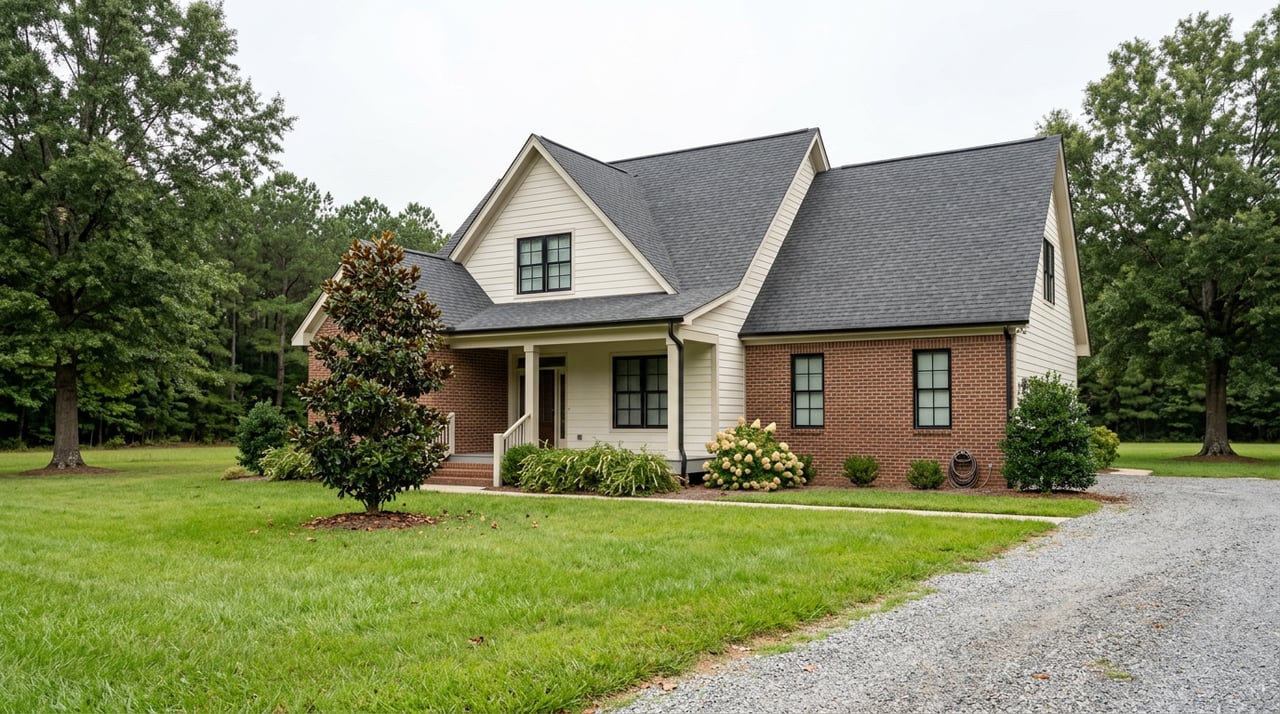
For residential buyers, the same math runs the other direction. If you've toured Sharpsburg and noticed how many listings sit on an acre, two acres, sometimes closer to three, with no HOA in sight, that isn't a marketing choice. It's what a septic-fed lot has to be to work. If you want the general framework for how Georgia's health districts size and permit these systems, the District 4 Public Health environmental health office, which covers Coweta County, handles that permitting and offers homeowner guidance on how onsite systems are supposed to function over time.
A Limit Written Into 1871
Sharpsburg was founded in 1871, back when commercial buildings weren't required to include restrooms at all. That rule from another century never really went away in practice, because without sewer, retrofitting a bathroom into a building that never had drain field capacity for one is often not physically possible. Mayor Good put it bluntly to The Citizen: "You can put as much money as you want into the buildings, but who's going to rent a business... that doesn't have a bathroom?"
That's not a hypothetical problem for a handful of storefronts. It's the reason downtown Sharpsburg has stayed frozen in a kind of holding pattern while towns nearby renovated their Main Streets into restaurants and shops. The building stock is fine. The plumbing math underneath it isn't.
"We're not trying to become Senoia or Newnan," Mayor Good said. "We're just trying to bring back our downtown... and just help our town survive."
That line matters for anyone comparing these towns as a buyer. Sharpsburg isn't positioning itself to compete with Senoia's walkable square or Newnan's downtown density. The ambition is narrower and more specific: keep the small commercial core viable, not turn the whole town into something it was never built to be.
Nine Years, One Signature Short
Here's the part that doesn't show up on a listing sheet. Coweta County and Sharpsburg operate under a 2006 intergovernmental agreement that, according to county staff cited by the Times-Herald, permits commercial and industrial sewer service but blocks residential sewer service to municipalities like Sharpsburg unless the county commission specifically approves it. Commercial buildings downtown have a legal path to sewer. Houses do not, at least not automatically.
Mayor Good took that request to the county commission in January 2026, citing failing septic systems, small lot sizes, soil limitations, and public health concerns going back more than two decades. State Rep. Josh Bonner, whose District 73 includes Sharpsburg, spoke in support and was careful about how he framed it: "The city of Sharpsburg is not asking for a handout. They're simply asking for an opportunity to work with the water and sewer authority and pay for that service as needed."
The board's response was measured. Commissioners voted to direct county staff to study the request further and work out parameters for a possible agreement, with no timeline attached. If you're weighing a purchase in Sharpsburg based on the assumption that sewer is coming soon and lots will start shrinking or subdividing, that assumption is ahead of where the county actually is.
What's Actually Moving
The commercial side of this story has more momentum. Coweta County's broader infrastructure needs are part of why. Aging systems in the Oaks of Turin subdivision are failing and costing the county money, Mayor Good told The Citizen, and fixing that is pushing sewer infrastructure investment farther west, toward Sharpsburg. That's a practical opening, not charity. An intergovernmental agreement tied to that commercial connection was expected to reach the Coweta County Commission in April 2026.
Sharpsburg is already using that momentum to think about what downtown could look like once sewer arrives. The town is working with Historical Concepts, the same planning and design firm behind Senoia's walkable downtown, on a vision for its own Main Street. Mayor Good says the early results have been encouraging: "We have got some amazing ideas... and buy-in from the property owners."
So here's the distinction that actually matters if you're deciding between these towns. Downtown Sharpsburg has a real, funded, in-progress path toward restaurants, shops, and mixed use that simply couldn't exist under septic. The acreage lots that make up the rest of the town, the ones drawing buyers who want space and privacy without giving up a short drive to Peachtree City or Newnan, are not on that same path. Residential sewer is still an open question sitting with county staff, not a settled timeline.
If You're Touring Lots in Sharpsburg
Because septic is still the default and will stay the default for most of the town regardless of what happens downtown, a few questions are worth asking on any Sharpsburg listing before you get attached to it:
- What type of septic system is installed: conventional gravity-fed, pump-assisted, or an alternative drip system? Newer developments on tighter or less permeable soils sometimes require the more expensive alternatives.
- Is there a recent soil evaluation or percolation test on file, and does the seller have septic permit and inspection records?
- Where is the drain field relative to where you might want to add a pool, a garage, or an addition? You cannot build over it without risking a malfunction.
- If the home is older, when was the tank last pumped, and has the system ever failed or required repair?
None of this is a red flag specific to Sharpsburg. It's simply the due diligence that unsewered acreage requires anywhere in Coweta County, and it matters more here because the septic constraint is the entire reason the lots look the way they do.
The Comparison That Actually Matters
If you're cross-shopping Sharpsburg against Senoia or Newnan, the honest version of that comparison isn't about which town has more charm. It's about which infrastructure problem each town has already solved. Senoia built its walkable downtown on sewer that was already in place. Sharpsburg is working, methodically and without a fixed date, toward solving that same problem for a few blocks of Main Street, while the rest of the town continues to run on the same septic math it always has.
For a buyer who wants a 1 to 3 acre lot, a slower pace, and proximity to Peachtree City without Peachtree City's density, that math is a feature, not a limitation. For a buyer expecting Sharpsburg to feel like Senoia's downtown within the next year or two, it's worth resetting that expectation now rather than after closing.
If you're weighing Sharpsburg against other Coweta or Fayette County communities, or you want a second opinion on what a specific listing's septic setup actually means for your plans, The Vender Group has spent years walking buyers through exactly this kind of local detail. Get in touch and let's look at what you're actually buying, acre by acre.